
DISCOVER THE ART OF KURINUKI
Ceramics is one of the oldest art forms in the world. Since prehistoric times, mankind has used clay to create utensils, decorative objects and works of art. The Kurinuki technique is one of the most unique and recognized ceramic techniques used in Japan. Through this technique, artisans can create unique and fascinating pieces of great beauty and simplicity. You will learn about a magical sample of Japanese ceramics, its history, characteristics and more. Join us!
WHAT IS KURINUKI
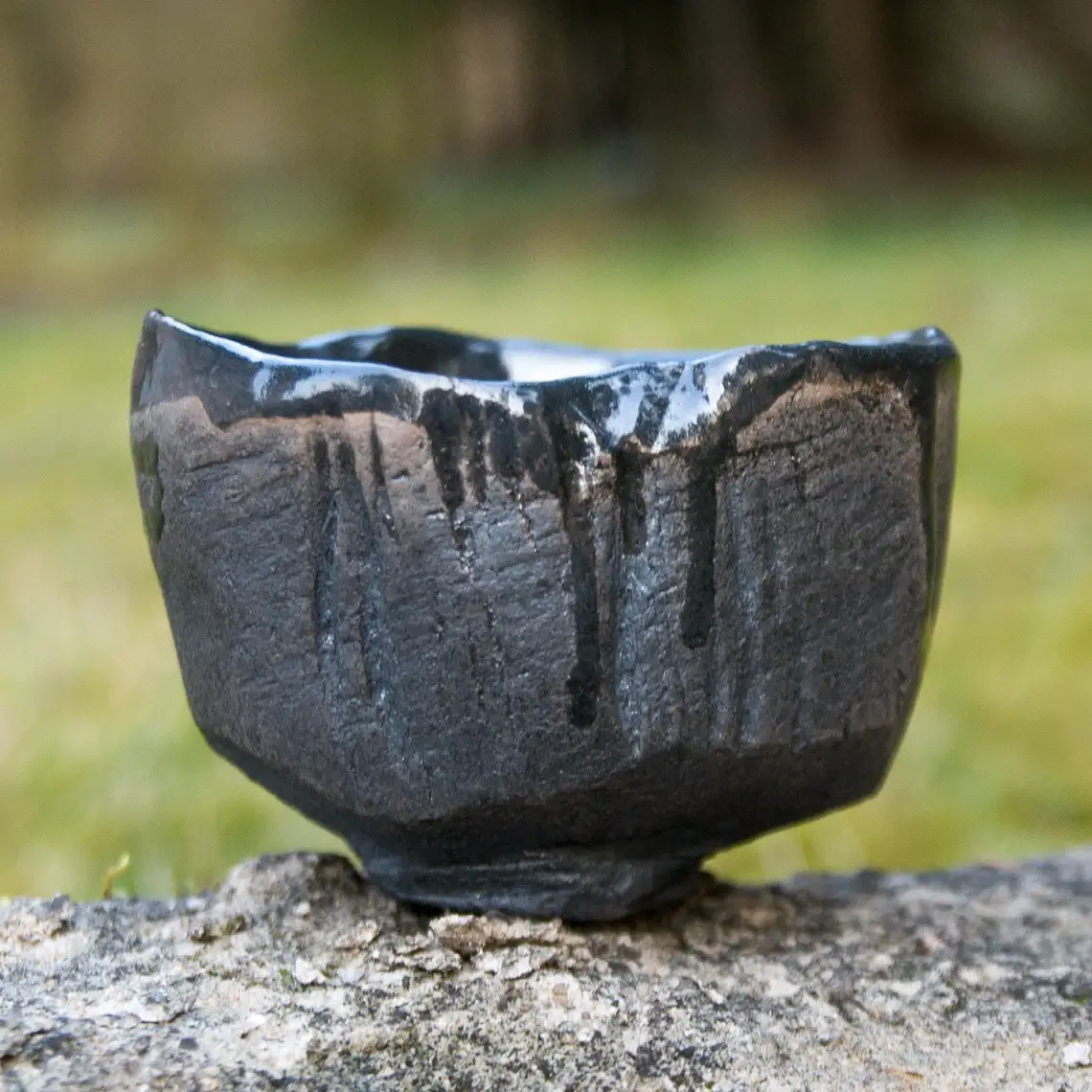
It is a Japanese ceramic technique that involves carving the desired shape into a piece of clay. The name kurinuki can be literally translated as “to hollow”.
A single lump of clay is used which is carved with the appropriate tools to achieve the desired shape. Instead of creating a work from individual pieces of clay, as is done in some other techniques, the piece is carved from a single block of clay. The result is frankly beautiful.

Tea bowl made with the Kurinuki technique. Made by
Sarah Maelle Ceramique.
WHAT DOES THE KURINUKI TECHNIQUE CONSIST OF?
The Kurinuki technique begins with the selection of the right block of clay. The artisan must ensure that the clay is soft and moist enough to carve easily, but not too wet to prevent cracking during carving.
Once the clay is selected, it is cut into the desired basic shape and carved using different tools, such as clay knives, needles and spatulas. As the piece takes shape, small amounts of clay are removed to achieve the desired design.
Artisans use this technique to create organic shapes and unique textures on the surface of the bowl. The Kurinuki process involves sculpting the clay from the inside of the bowl to the outside, rather than shaping the form from the outside to the inside, as is done in other ceramic techniques.
Finally, the part can be smoothed and polished to obtain a smooth and uniform finish.


LEARN MORE ABOUT ITS ORIGIN AND USES
The Kurinuki technique dates back to medieval Japanese times, where it was used to make ceramic objects for the tea ceremony. During the Edo period (1603-1868), the technique was extended to the production of other everyday objects, such as bowls and plates. Despite the popularity of the technique, most objects produced with Kurinuki were made for personal use and were not widely marketed.
Due to the special nature of this technique, each resulting piece is unique and no two pieces can be made alike. This uniqueness has led many artisans to embrace the Kurinuki technique as an art form to express themselves with unrepeatable creations.
One of the most popular applications of this technique is in the creation of Yunomi bowls, which are used in the Japanese tea ceremony.
These ceramic bowls have a cylindrical shape and are sometimes wider at the base than at the mouth. They are used for drinking tea and are held with both hands while drinking. Because of their ceremonial use, these pieces are of great cultural importance in Japan.
Another type of bowls that are made with Kurinuki are the Chawan, these are less cylindrical and wider.
 Facebook
 Twitter
 Tumblr
 Pinterest
LATEST POSTS
Greek pottery
GREEK POTTERYGreek pottery is a gift of classical art that has survived to the present day. Fortunately, we have preserved many pieces, some in perfect condition, and there are more than 20,000 in the archaeological museum of Athens alone! Throughout...
How to knead clay
HOW TO KNEAD CLAY Want to get a clear idea on how to knead clay, what mistakes to avoid and some useful tricks? Kneading is a fundamental task for the ceramist, which saves us future problems in the following phases of creation of our pieces and is the basis for...
Stoneware
STONEWAREStoneware is one of the most widely used types of ceramics. Very versatile in its applications. Find out its properties and what differentiates stoneware from other ceramics, such as porcelain.Handmade rustic ceramic work in stoneware by Kari Ceramics WHAT IS...
Porcelain
PORCELAINPorcelain is one of the most valued types of ceramics since ancient times. We tell you about its exciting history, why it was so appreciated, the myths about its arrival in the West. We review their types and differences. We will see the existing artistic...
Raku
RAKUA journey through the air, through fire, to the alchemy of water and earth.Text and images by Martha Little of Wild Clay Works (GRANADA)It is said that the human being was created with a ball of mud... From the mud, the earth has been moving for 300 billion years,...
Link
Note: This article contains affiliate links that lead to the artists’ stores outside of the Ateologic website. If you buy something from them, we will receive a small commission that will help us to continue our site and in turn continue to support those artists. This of course does not affect the selling price.